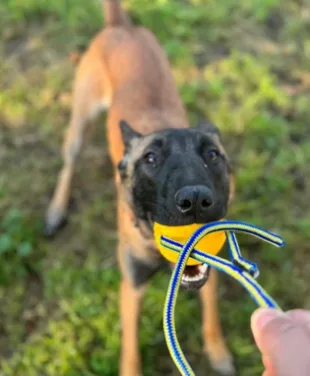
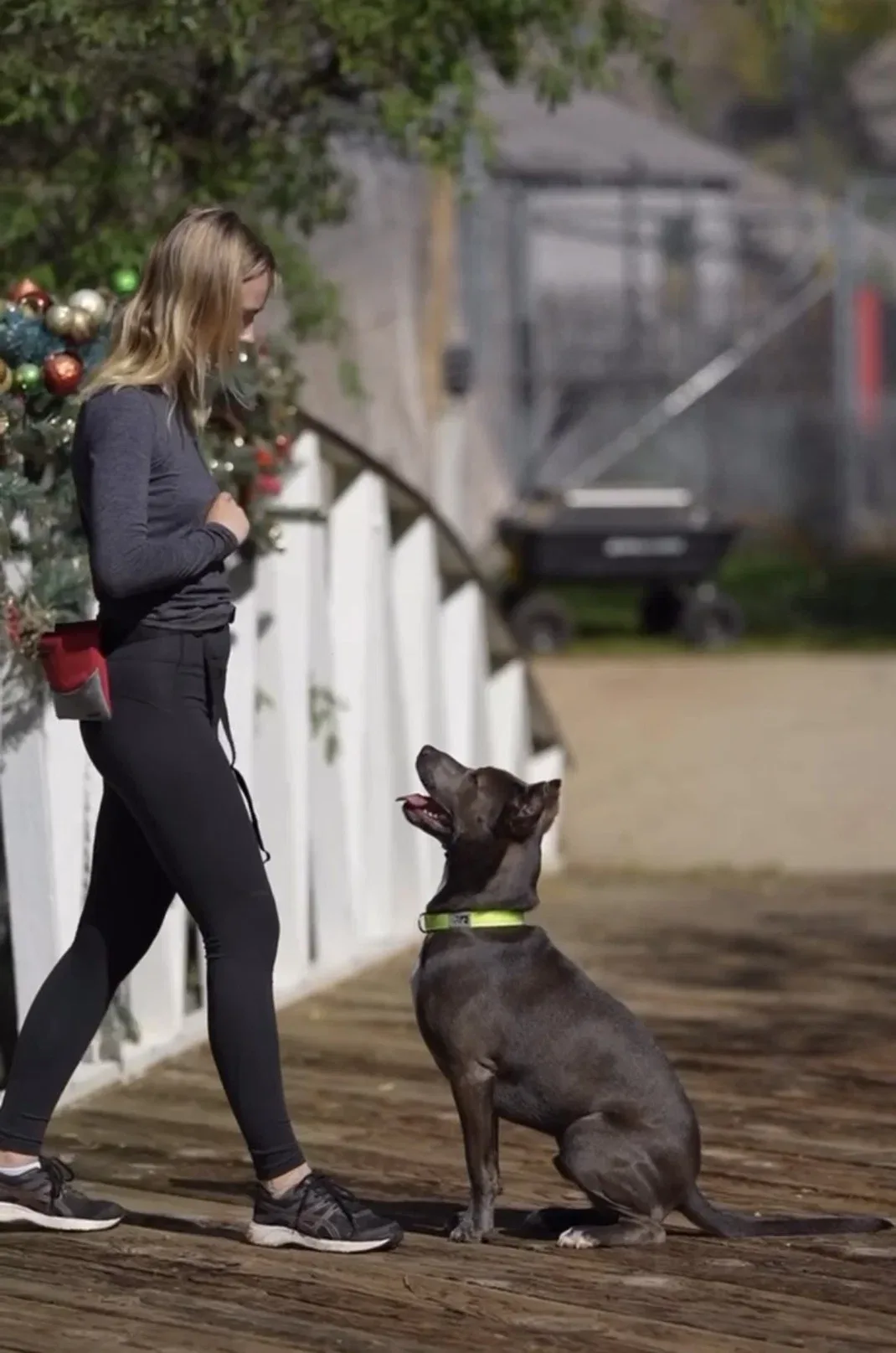
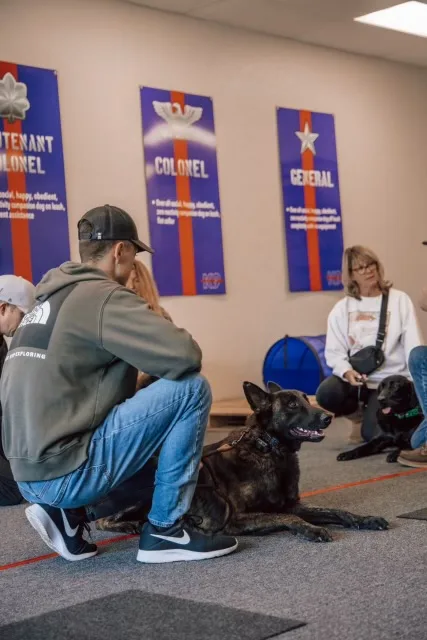
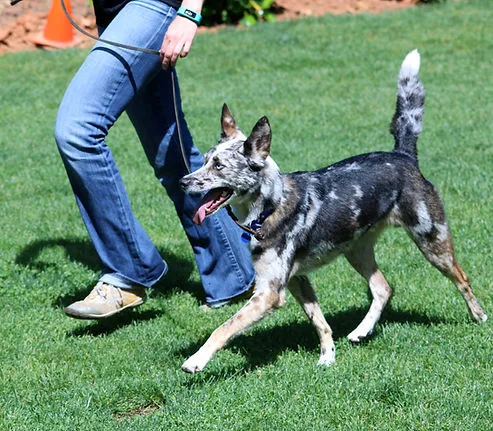
Many dogs and trainers interacting in a bright indoor facility during group dog training classes

Program guide

Dog Group Classes: Costs, Curriculum, and What to Expect

Group classes are scheduled dog training courses where several owners and dogs learn the same curriculum together, often priced per multi-week course and commonly running about six to eight weeks for basic obedience or puppy kindergarten. Nationally, group classes costs $90$300 Per Course, with a median of $215, based on 56 programs that publish pricing across our directory. See the full 2026 industry report →

This guide covers what group classes involves, how much it costs in your area, how it compares to other program types, which dogs it suits, and what to ask before booking.

136

Programs listed

2

States

$215

Median Per Course

Typical length

1–6 weeks/classes

Last updated: August 2026

What are dog group classes?

Group classes put you on a shared calendar with other households practicing the same skill ladder. A typical session lasts about 45 to 60 minutes, once a week, for a course that often spans six to eight weeks. You are paying for structured curriculum, coach feedback in a social setting, and affordable reps, not a custom behavior plan. That economy of scale is why group class is usually the lowest-cost entry point into formal training, especially for puppies and friendly adult dogs that can learn near classmates.

Curriculum tracks differ. Puppy kindergarten emphasizes socialization patterns, name response, housetraining support, and bite inhibition guidance appropriate to young dogs. Basic obedience covers sit, down, loose-leash walking, stays, and polite greetings in a classroom pattern. Canine Good Citizen prep aims at the AKC test items and public manners. Advanced manners or rally classes exist in some schools once foundations are solid. The shared syllabus is a strength for predictable goals and a weakness when your dog needs distance work from triggers that a circle of dogs will keep rehearsing.

Your job in class is active handling, not spectating. Instructors rotate attention across the room, so progress still depends on your homework between meetings. Arrive with a hungry dog, high-value treats if food is allowed, and equipment the school approves. Vaccination proof is usually required before the first night. Class size matters: smaller groups mean more coaching minutes per team, while oversized rooms turn into crowd management. Ask about the maximum enrollment and whether makeup sessions exist if you miss a week.

Group class is usually the wrong first choice for a reactive dog that lunges, barks, or shuts down around other dogs. A busy classroom can rehearse the problem and raise risk for everyone. Start with private or carefully managed parallel work, then graduate to group only when a trainer confirms your dog can learn near distractions. Choose group class when your dog is socially able, you want affordable structure, and your goals match a standard curriculum. Skip it when safety, fear, or aggression needs individualized setups. If you are torn between formats, ask whether the school offers a short evaluation night or a private bridge session before you commit to a full course seat that your dog cannot use productively.

Expect the room to be noisy and imperfect. That is part of the value for dogs ready for distraction, and part of the hazard for dogs that are not. Good instructors protect spacing, rotate practice stations, and tell you when to step farther away instead of forcing a greeting. If an instructor shrugs at crowding or treats every struggle as owner failure, keep looking. A well-run class should leave you with clearer homework, not just a tired dog and a stamped attendance card.

How group classes work

  1. Enroll and clear vaccine rules

    You pick a level that matches your dog's age and skills, submit vaccination records, and get the equipment list before week one.

  2. Weekly classroom sessions

    The instructor teaches a shared lesson, coaches handlers in turn, and keeps the room moving so every team practices the same skills.

  3. Homework reps at home

    Short daily practice between class nights is what turns a weekly demo into fluent manners on your own sidewalk.

  4. Graduation or next level

    Many schools offer a completion class, CGC prep, or an advanced track once foundations are reliable around mild distractions.

How much do dog training classes cost in your area?

Medians require at least 3 published prices. City views fall back to state, then national, when samples are thin.

Loading price calculator…

How do group class prices compare across the country?

Nationally, published group classes prices show a median of $215 Per Course (range $90$300, n=56). The table below ranks states with enough priced samples to compare.

Group Classes published prices by state. Amounts in USD (Per Course). Medians require n≥3 priced programs.
StateMedianRangevs nationaln
California$215$86–$3000%49
Alabama$295$295–$295+37%7

Group classes vs other types of dog training

Use this comparison to decide whether group classes matches your goals, schedule, and involvement level.

Dog training program types compared. The type for this page is listed in bold (not linked).
TypeCost noteTypical lengthOwner roleBest forLess suited to
Board and Train

Median $2,825

Highest total cost; often priced per week or as a multi-week packageUsually 2 to 4 weeks on site, plus owner handoff lessonsLow during the stay, high at handoff and afterwardIntensive daily reps on a short, clear skill listProblems that only appear in your specific home routines
Private Lessons

Median $200

Mid-market; usually priced per hour or per session packageOften 4 to 12 sessions over several weeksHigh in every session and in homework between visitsCustom goals, reactivity work, and coaching your handlingOwners who cannot practice between appointments
Group Classes

Median $215

Usually the lowest-cost formal option; priced per multi-week courseOften 6 to 8 weekly sessions for a standard courseHigh during class nights and in homework between meetingsSocially able dogs needing affordable curriculum and practiceReactive dogs that cannot learn safely around classmates
In-Home Training

Median $250

Per session, often with travel time or a travel fee built inCommonly 60 to 90 minute visits across several weeksHigh; household handlers practice in the real environmentDoor manners, home routines, and dogs that learn best at homeGoals that need facility decoys or all-day residential reps
Virtual Training

Median $149

Often lower than in-home; priced per live session or online packageCommonly 45 to 60 minute video sessions across several weeksVery high; you handle every rep while being coached on cameraHome plans, puppy routines, and coachable protocols you can run safelyAggression cases and hands-on leash mechanics under distraction

Are group classes right for your dog?

Good fit if…

  • Your dog can learn near other dogs without lunging, panicking, or shutting down
  • You want an affordable multi-week curriculum for puppy foundations or basic obedience
  • Social practice in a supervised room is part of your goal
  • You like a fixed weekly schedule and a clear lesson plan
  • You are preparing for Canine Good Citizen or similar manners tests

Consider something else if…

  • Your dog is reactive and a busy classroom would rehearse barking or lunging
  • You need a custom plan for aggression, isolation distress, or complex fear
  • Your dog cannot safely or humanely participate around unfamiliar dogs yet
  • You want coaching inside your exact home routines rather than a classroom pattern
  • You need daily intensive reps that a once-a-week class cannot provide

What should you ask before booking a group class?

  1. What is the maximum class size?

    Size controls how much individual coaching you actually receive.

  2. Which vaccinations are required, and by which date?

    Showing up without proof can mean sitting out week one.

  3. Is this puppy kindergarten, basic obedience, or CGC prep?

    Tracks teach different skills and assume different ages.

  4. What equipment and treats are allowed or banned?

    Surprises about collars, harnesses, or food create friction on night one.

  5. How do you handle dogs that struggle in the room?

    You want a plan that protects learning instead of public embarrassment.

  6. Are makeup sessions available if we miss a week?

    Life happens, and policies vary from flexible to none.

  7. Do you screen for reactivity before enrollment?

    Honest screening keeps reactive dogs out of the wrong room.

  8. Who teaches, and what training do instructors have?

    Assistant-led rooms are fine if quality is consistent and disclosed.

  9. Is the fee per course, per drop-in, or per month?

    Billing models change the real cost of finishing the curriculum.

  10. What comes after graduation if we want more practice?

    A next-level path matters if manners still need polish.

What certifications should a dog trainer have?

Credentials vary widely. Tap a chip to see what it requires, what it signals, and how many programs in our directory list it.

Certified Professional Dog Trainer – Knowledge Assessed

Certification Council for Professional Dog Trainers (CCPDT)

What it requires
Candidates must document hands-on training hours, pass a proctored knowledge exam, and complete continuing education to renew.
What it signals
Signals classroom-level knowledge of learning theory, instruction skills, and common companion-dog problems.
What it does not mean
Does not by itself prove specialty skill with aggression, nor that a trainer uses only one method.
In our directory
7 programs list this credential (n=7).

Check the issuing body's public registry

Certified Professional Dog Trainer – Knowledge and Skills Assessed

Certification Council for Professional Dog Trainers (CCPDT)

What it requires
Builds on CPDT-KA with an additional skills assessment of real training and teaching ability.
What it signals
Signals verified practical teaching skill on top of the knowledge exam.
What it does not mean
Still not a veterinary behavior credential and not a guarantee of outcomes for every dog.
In our directory
0 programs list this credential (n=0).

Check the issuing body's public registry

Karen Pryor Academy Certified Training Partner

Karen Pryor Academy

What it requires
Completion of the KPA professional program with coursework, mentorship, and assessed practical skills emphasizing positive reinforcement.
What it signals
Signals formal education in force-free, marker-based training and client coaching.
What it does not mean
Does not mean every graduate refuses all aversive tools in every case, and it is not a medical credential.
In our directory
1 program list this credential (n=1).

Check the issuing body's public registry

Certified Behavior Consultant Canine – Knowledge Assessed

Certification Council for Professional Dog Trainers (CCPDT)

What it requires
Requires substantial consulting experience hours, case documentation, and a behavior-focused knowledge exam.
What it signals
Signals deeper study of canine behavior consulting than entry-level trainer certifications.
What it does not mean
Is not a veterinary behaviorist (DACVB) title and does not authorize medical diagnosis.
In our directory
0 programs list this credential (n=0).

Check the issuing body's public registry

International Association of Animal Behavior Consultants credential

International Association of Animal Behavior Consultants

What it requires
Membership and credential tracks typically require case experience, coursework, and peer review standards that vary by level.
What it signals
Signals engagement with a professional behavior-consulting community and ethics standards.
What it does not mean
Levels differ; the letters alone do not explain which track or specialty a person holds.
In our directory
4 programs list this credential (n=4).

Check the issuing body's public registry

International Association of Canine Professionals membership

International Association of Canine Professionals

What it requires
Professional membership with optional certifications; requirements depend on the specific IACP designation.
What it signals
Signals affiliation with a broad professional network that includes multiple training philosophies.
What it does not mean
Membership is not the same as a standardized independent exam like CPDT-KA.
In our directory
8 programs list this credential (n=8).

Check the issuing body's public registry

Association of Professional Dog Trainers membership

Association of Professional Dog Trainers

What it requires
Professional association membership; education offerings and member standards apply, but it is not a single licensing exam.
What it signals
Signals participation in a large trainer education community.
What it does not mean
APDT membership alone is not a competency certification.
In our directory
9 programs list this credential (n=9).

Check the issuing body's public registry

Certification Council for Professional Dog Trainers (organization)

Certification Council for Professional Dog Trainers

What it requires
CCPDT is the certifying body behind credentials such as CPDT-KA and CBCC-KA rather than a single personal certificate code.
What it signals
When listed, it usually points to CCPDT-issued credentials held by the trainer.
What it does not mean
Seeing the organization name is not a substitute for checking the specific credential and registry entry.
In our directory
4 programs list this credential (n=4).

Check the issuing body's public registry

Animal Behavior College Dog Trainer certification

Animal Behavior College

What it requires
Completion of the ABC dog trainer program, including coursework and an externship with a mentor trainer.
What it signals
Signals structured entry-level education and mentored practice hours.
What it does not mean
Is a school certificate, not the same as an independent third-party exam like CPDT-KA.
In our directory
3 programs list this credential (n=3).

Check the issuing body's public registry

Victoria Stilwell Academy Certified Dog Trainer

Victoria Stilwell Academy of Dog Training & Behavior

What it requires
Graduation from the VSA professional program with assessed coursework and practical requirements.
What it signals
Signals education aligned with positive, science-based training coursework from that academy.
What it does not mean
Academy certification is not a government license and does not replace veterinary care.
In our directory
0 programs list this credential (n=0).

Check the issuing body's public registry

AKC Canine Good Citizen Evaluator

American Kennel Club

What it requires
AKC approval to administer Canine Good Citizen and related tests after meeting AKC evaluator requirements.
What it signals
Signals authorization to test CGC manners skills and familiarity with AKC CGC standards.
What it does not mean
Being an evaluator is not the same as being a full-time behavior consultant or aggression specialist.
In our directory
13 programs list this credential (n=13).

Check the issuing body's public registry

Top-rated group class programs

A short sample of published group classes programs, sorted by transparency. For a full city list, open a local directory page.

Active Canine Academy — dog training in Riverside, CA
Active Canine Academy
Riverside, CA
Score 90

Board & train programs from two to five weeks, plus specialized separation anxiety and service dog training across Riverside, LA, and Orange County

5.0(55 Google Reviews)

Board and Train ranges from $1,990 for a two-week puppy program (ages 2-5 months) up to $4,000 for five weeks, which includes follow-up and handoff sessions. Private Lessons are $150 per session or $1,000 for ten, with lifetime support included. Group Classes run five weeks for $600. Virtual Training is $100 per session ($900 for ten) or $600 per month for separation anxiety work. Service dog training pricing is available on request.

View More
Fidelis K9 — dog training in Orangevale, CA
Fidelis K9
Orangevale, CA
Score 97

Rancho Cordova dog training with drop-off School of Foundations programs, Private Lessons, Group Classes, aggression-focused Private Lessons, and advanced CGC and UCGC preparation.

5.0(51 Google Reviews)

School of Foundations is a daytime drop-off format offered for 5, 10, or 15 days at $1,015 to $3,045, with dogs returning home nightly. Private Lessons cost $200 for non-members or $250 for aggressive dogs, while a four-lesson puppy package costs $480. Group Classes start at $225 for the first month, then $59 monthly for one dog or $89 for multiple dogs. A 20-day Boot Camp is $4,660 and includes Private Lessons, Group Classes, CGC preparation, testing, and certificates.

View More
Custom-K9 Bay Area Dog Training & Boarding — dog training in Pacifica, CA

Balanced, relationship-based dog training in Pacifica with private in-home coaching, day training, group workshops, board-and-train, structured daycare, and boarding for Bay Area dogs.

5.0(26 Google Reviews)

Private training costs $200 for one session, $540 for three, or $850 for five. Day Training is sold in 12-day and 24-day packages, currently advertised at promotional prices of $1,260 and $2,340, with one or two at-home private sessions included. Sunday group workshops cost $45. First-time private and day-training clients must purchase a Facility Consultation. Board & Train is also offered, but its current price and duration are not published in the provided pages.

View More
Play Pause
I Heart K9
Riverside, CA
Score 90

Working dog and protection training led by a 30-year instructor with K9 handler background, plus beginner obedience and reactive dog help

4.9(37 Google Reviews)

Group Classes range from $20 to $40 per session, with obedience-only options at $20 and combined obedience and protection training at $40 across two days—though protection work requires prior obedience participation. Puppy obedience classes are also available at $20 per session on Wednesday nights. Private Lessons are $75 per session, while In-Home Training is $100 per session, available locally in Riverside with a travel fee for those more than 20 minutes from the training field.

View More
K9 Parent Training LLC — dog training in Palm Desert, CA
K9 Parent Training LLC
Palm Desert, CA
Score 90

Balanced dog training in Palm Springs with private in-home coaching, virtual sessions, residential Doggie Training Camp, alumni maintenance stays, behavior modification, and educational workshops.

4.9(21 Google Reviews)

Free consultation

Virtual training costs $90 for one session or $240 for three. In-home private training is $200 for a single session, $450 for three, or $700 for five. Doggie Training Camp costs $1,000 per week with a three-week minimum, while more challenging cases commonly require four to six weeks. Alumni maintenance stays are $100 per day. A free phone consultation, variable-price workshops, and $1,000 full-day training for individuals or organizations are also offered.

View More
California Canine Dog Training — dog training in Pacific Grove, CA
California Canine Dog Training
Pacific Grove, CA
Score 93

Force-free dog training in Pacific Grove with private lessons, puppy and obedience classes, agility, reactivity support, separation-anxiety training, scent work, recall, and therapy-dog preparation.

4.8(85 Google Reviews)

Private training costs $115 for one 30-minute session, $425 for four sessions, or $775 for an eight-session rescue-dog package. Group classes use flexible packs priced at $215 for five classes or $375 for ten. Fixed workshops range from $150 for three-week recall or loose-leash programs to $350 for six-week Therapy Dog Certification Prep. Evaluations cost $45 to $60. Separation-anxiety training begins with a minimum four-week program, but pricing is not published.

View More
BravoPup Social — dog training in Oakland, CA
BravoPup Social
Oakland, CA
Score 90

Bravo!Pup in the East Bay offers Group Classes, Virtual Training, Private Lessons, puppy socialization, leash-reactivity support, and force-free positive reinforcement training across multiple Bay Area locations.

5.0(7 Google Reviews)

Group Classes include progressive puppy and adult training plus recall, leash manners, and tricks, generally priced from $250 to $275 for five weekly classes. Virtual Training includes shy and fearful, play behavior, leash reactivity, puppy foundations, and advanced skills, with published packages from $125 to $300. Private Lessons are also available through an intake process, although pricing is not published. Several specialty classes are marked “Coming Soon,” so current availability should be confirmed.

View More
Dodgers Paws — dog training in Pleasanton, CA
Dodgers Paws
Pleasanton, CA
Score 91

Positive-reinforcement puppy, foundation skills, behavior-focused classes, and a broad lineup of dog sports in Pleasanton, with programs ranging from one-time socials to six-week courses.

4.6(51 Google Reviews)

Foundation Skills classes range from $205 for five weeks to $245 for six weeks, while three-week recall and loose-leash mini classes are $165. Puppy Discovery Socials cost $25. Sports classes generally run four to six weeks and range from $165 to $245, with Barn Hunt workshops from $35 to $90. An AKC Canine Good Citizen prep class is $245 for six weeks. Private one-on-one lessons are also available, though pricing is not published.

View More

What dog owners say.

Rachel M. with her two Australian Shepherds

After adopting two high energy Aussies, I was overwhelmed trying to find a trainer who could handle them both. Every website I visited had vague descriptions and no real pricing. Barklen let me compare credentials, methods, and costs side by side without making a dozen phone calls. I finally felt confident choosing someone who matched our needs. I tell every dog owner I know to start their search here.

Rachel M., Boise, ID

Frequently asked questions

How much do dog training classes cost?

Group classes are usually the most affordable formal training format and are commonly sold as a multi-week course rather than a single drop-in. Published national ranges vary by city and by whether the course is puppy kindergarten, basic obedience, or specialty prep. Use the local calculator on this page for {range} {unit} when enough programs publish pricing.

What vaccinations are required for dog training classes?

Most group classes require age-appropriate core vaccines such as DHPP or equivalent and rabies, and many also ask for Bordetella. Puppy classes may accept a current vaccine schedule rather than a full adult set. Confirm the exact list with the provider before the first meeting, because rules are set by the school, not by a single national standard.

What age can a puppy start group classes?

Many puppy kindergartens accept puppies after early vaccine doses, often around eight to sixteen weeks depending on the school's veterinary policy. Younger is not always better if the room is overwhelming. Ask about age windows, vaccine timing, and whether shy puppies get extra space.

Are group classes good for reactive dogs?

Usually no. If your dog lunges, barks, or shuts down around other dogs, a busy classroom can rehearse the problem and raise risk for everyone. Start with private or carefully managed parallel walks, then consider group work only when a trainer confirms your dog can learn near distractions.

How long is a dog obedience course?

A basic obedience or puppy course often runs about six to eight weekly sessions, though some schools use four-week intensives or ongoing membership models. Length should match the curriculum, not just the marketing calendar. Ask how many instructional hours you receive in total.

How many dogs are in a typical class?

Class size varies widely, from small groups of about four to six teams to larger rooms of a dozen or more. Smaller classes usually mean more coaching per handler. Ask for the maximum enrollment, not just the average on a quiet week.

What should I bring to a dog training class?

Bring vaccination records if required, a secure leash and approved collar or harness, high-value treats unless the school provides food, waste bags, and water. Leave flexible retractable leashes at home unless the instructor says otherwise. Confirm the gear list before night one.

Puppy kindergarten vs basic obedience: what's the difference?

Puppy kindergarten focuses on early socialization patterns, impulse control beginnings, and owner education for a developing puppy. Basic obedience targets manners skills for adolescents and adults in a more formal cue curriculum. Age, energy, and prior skills should drive which track you pick.

Do group classes work for adult dogs?

Yes. Adult dogs can learn in group classes when they are socially able and the curriculum matches their level. Adult beginners may need a foundations class rather than an advanced manners room. Dogs with established reactivity still usually need private work first.

What is Canine Good Citizen and how do you prepare?

Canine Good Citizen is an AKC manners test covering skills such as polite greetings, loose-leash walking, and calm behavior around distractions. Many schools offer CGC prep classes and have evaluators on staff or nearby. Preparation is mostly fluent obedience plus rehearsal of the specific test items.